
Categories
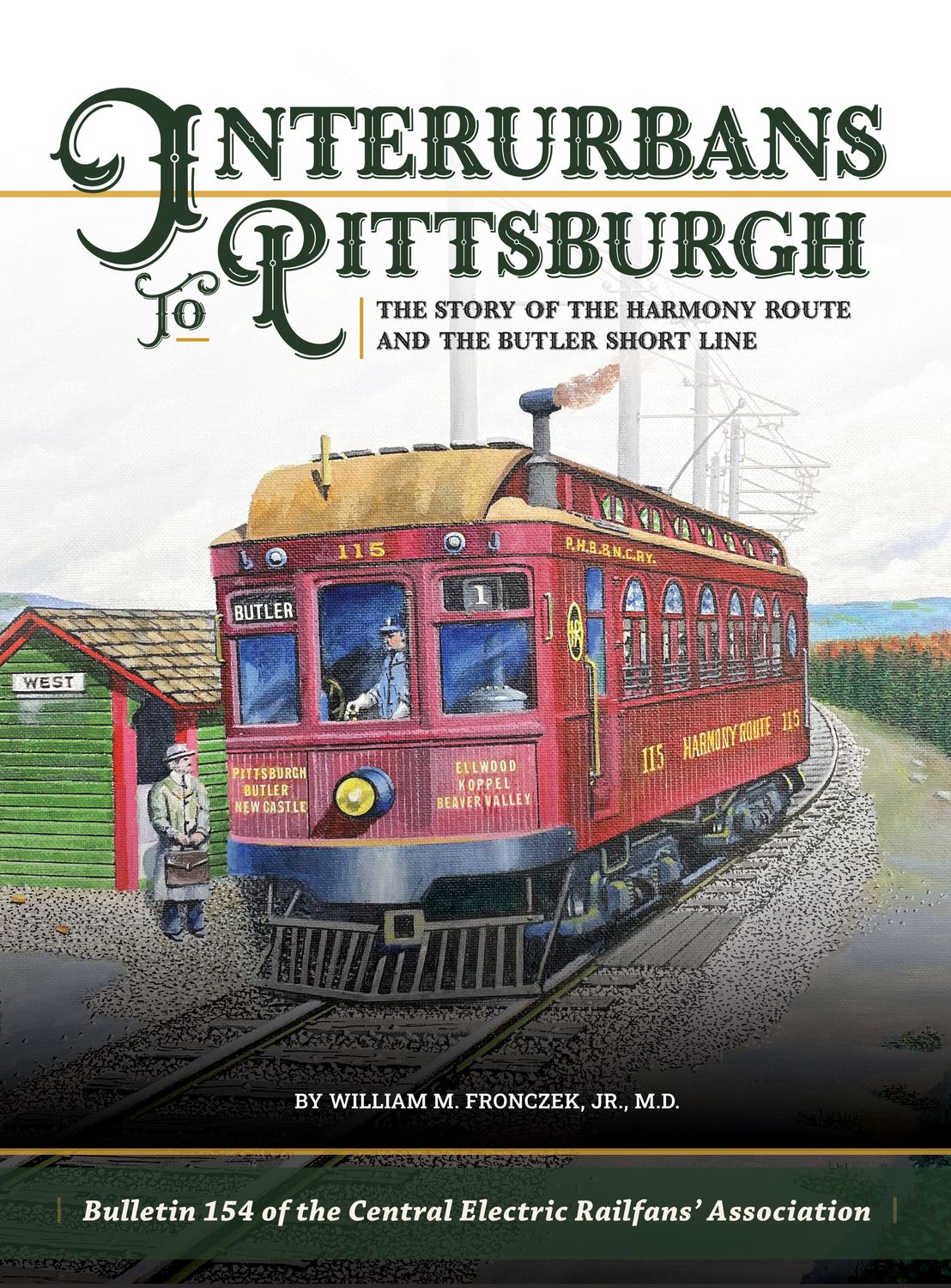
Interurbans to Pittsburgh
$55.00
NEW
The story of the Harmony Route and the Butler Short Line
In stock: 72 available
Product Details
Interurbans to Pittsburgh, by William Fronczek, Jr., M.D., is the story of the Harmony Route and the Butler Short Line. These lines were well-built with heavy catenary, deep ballast, and a series of spectacular bridges and cuts to push the lines through the rugged western Pennsylvania terrain. An early experimental high-voltage line, the Butler Short Line began life at 6,600-volts AC but later converted to the 1,200-volt DC operation of its sister interurban, the Harmony Route. Overall, the technology, operations, and equipment of these two lines were far above those of the average Pennsylvania country trolley line.
Both the Harmony Route and the Butler Short Line were built to broad gauge so their cars could access downtown Pittsburgh over the tracks of Pittsburgh Railways. Broad-gauge operation precluded carload interchange with steam railroads so the lines made efforts to establish their own broad-gauge freight network. Both passenger and freight service were hard hit by automobile and truck competition. The lines could not survive the Great Depression and were abandoned by 1931 although the company’s replacement bus service remained in operation until the early 1960s.
Come back in time with us as Bill Fronczek recreates a period in Pittsburgh history when the interurban had a prominent place and a promising future.
146 Pages
280 Photos
12 Maps
Complete Equipment Roster
Interurbans to Pittsburgh
